 Sagano Bamboo Forest
9 Arashiyama Bamboo Forest Mistakes to Avoid (Local Tips)
Most arashiyama bamboo forest tips repeat the same two lines: go early, wear comfortable shoes. Useful, incomplete. The mistakes that actually flatten the visit are quieter, arriving at 11:00, budgeting an hour for a 15-minute path, expecting the postcard photograph from the public walkway, or planning an evening around an illumination that ended years ago. Here are the nine we see most, each with its fix and what the fix costs.
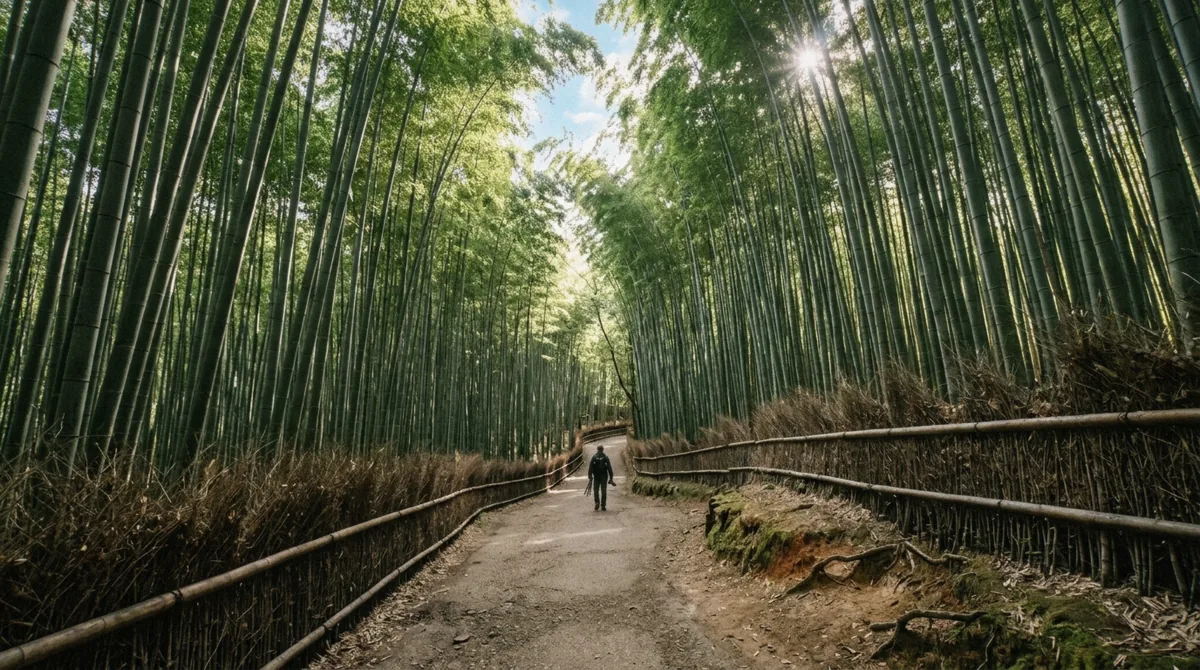
Quick answer
The costliest mistake is arriving between 10:00 and 16:00, when tour coaches fill the 400 metre path and every photo has forty strangers in it. The path itself takes 10 to 15 minutes end to end, so the fix costs nothing: show up before 8:00 or after 17:00 instead.
Key takeaways
- Arriving 10:00 to 16:00 turns a 10-15 minute walk into a crowd-dodging exercise; go before 8:00 or after 17:00
- The grove is one 400 m path, not a half-day trail; budget the rest of the morning for Tenryu-ji and Nonomiya Shrine, not more bamboo
- The empty-lane photo you have seen is rickshaw-only, not something the public path delivers on foot
- Iwatayama Monkey Park entry is 800 yen for adults, cash only, no cards or IC cards at the gate
- Night visits for glowing bamboo stopped being a regular thing after the Hanatouro festival ended in 2021
- Wondering if the grove earns a special trip at all? See our honest is it worth it breakdown
Tours That Solve the Two Biggest Mistakes
The two mistakes that ruin the most visits, crowds and the wrong entry point, both have a tour-shaped fix. The all-inclusive bus tour routes through Tenryu-ji's north gate rather than the crowded south approach, and the rickshaw tour is the only way into the closed lane behind the famous photographs.
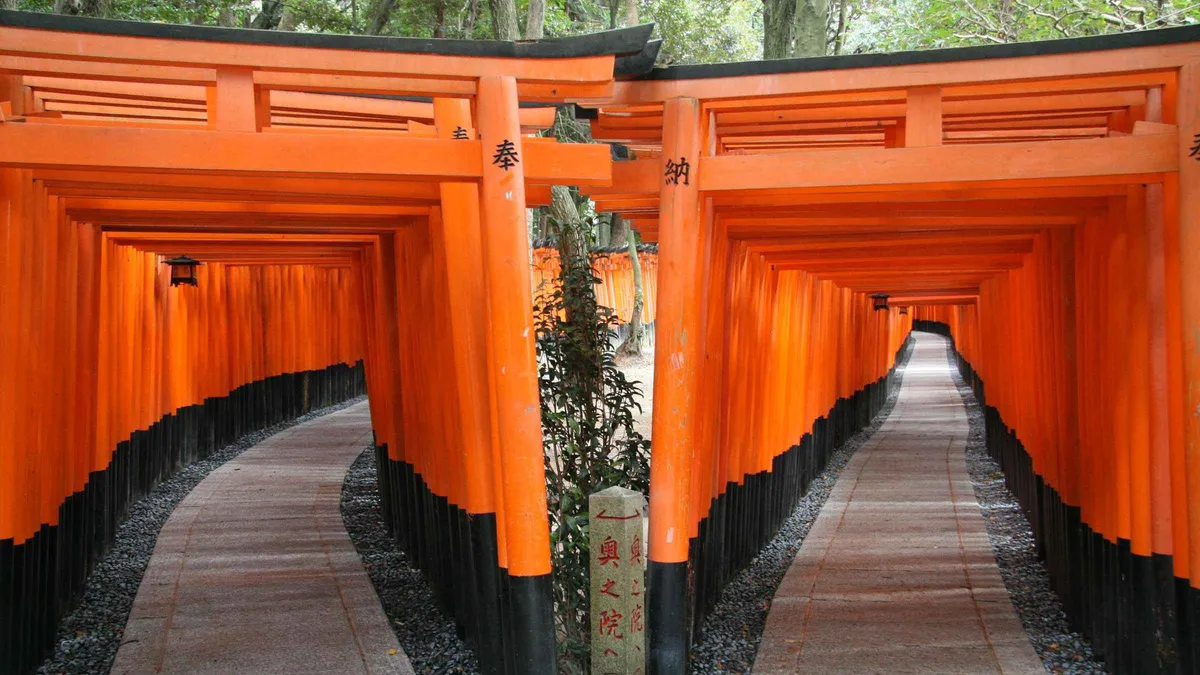
Kyoto: Fushimi Inari, Kinkakuji, Bamboo Grove 1 Day Bus Tour
The most-reviewed listing in this catalog by a wide margin: 4.8 from 5,217 bookings. An all-inclusive day — Kiyomizu-dera, Sanjusangendo, Tenryu-ji, the bamboo grove, Kinkaku-ji and Fushimi Inari — with four temple admissions, Japanese buffet lunch option and audio guides in six languages.
- Cancellation
- Free cancellation 24h
- Operator
- Japan Panoramic Tours
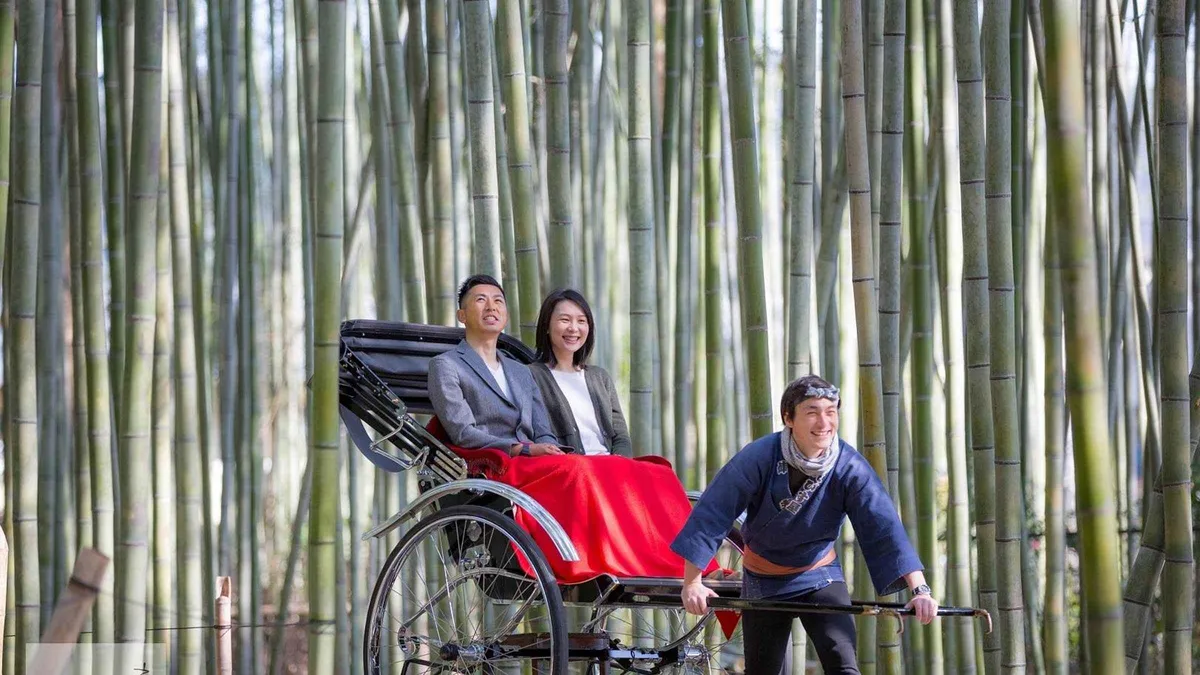
Kyoto: Arashiyama Customized Rickshaw Tour & Bamboo Forest
A private rickshaw with your own puller-guide, and the single biggest thing money can buy here: access to the fenced rickshaw-only lane through the bamboo, the stretch walkers never enter. Four lengths from 45 minutes to just over 3 hours; longer options add Rakushisha cottage and Nison-in.
- Cancellation
- Free cancellation 24h
- Operator
- Ebisuya Rickshaw
Mistake #1: Arriving Between 10:00 and 16:00
What people do and why it hurts
Most visitors reach the grove straight after breakfast at their hotel, which lands them at the entrance right as the first coaches unload, and the crowd only thickens from there through the early afternoon. The path is 400 metres wide at its widest and narrow at its narrowest, so forty people moving in both directions at once means stopping, waiting, and a background of camera shutters and strangers in every frame.
What it costs you: not money, but the entire reason most people come, which is the photograph and the quiet. A path that takes 10 to 15 minutes walked freely can eat 30 minutes of shuffling and re-taking the same shot.
What to do instead: arrive before 8:00, when the grove is close to empty, or return after 17:00 as the tour buses clear out. Neither costs anything extra, since the grove has no gate and no closing time.
The crowd clock, at a glance
| Time | What the path looks like | Verdict |
|---|---|---|
| Before 8:00 | Residents, photographers, near-empty corridor | Go |
| 8:00–10:00 | Filling steadily, still workable | Fine |
| 10:00–16:00 | Coach groups own the path, southern gate jammed | Avoid |
| After 17:00 | Flow reverses toward the stations, quiet returns | Go |
Mistake #2: Budgeting Hours for a 400 Metre Path
What people do and why it hurts
Photos of the grove make it look vast, so first-time visitors often block out a half-morning just for the bamboo. In practice the signed path, Chikurin-no-Komichi, covers roughly 400 metres from Nonomiya Shrine to the gate of Okochi-Sanso, a gentle uphill walk of 10 to 15 minutes at an ordinary pace.
What it costs you: wasted time that could have gone to Tenryu-ji's garden or the rest of Sagano, and a nagging sense that the grove itself was a letdown because it ended sooner than expected.
What to do instead: treat the walk itself as a short interlude and plan the actual morning around Tenryu-ji, Nonomiya Shrine and Okochi-Sanso, all of which sit on or beside the same path. For the full sequence of what surrounds the grove, see our history and layout guide.
Mistake #3: Expecting the Postcard Shot on Foot
What people do and why it hurts
The single most shared image of this grove, an empty lane with bamboo arching over both sides and nobody in frame, is not something the public path produces. That stretch is fenced and signed for rickshaws only, run exclusively by Ebisuya, and pedestrians never set foot on it.
What it costs you: a walk along the public path expecting that photo, and disappointment when every frame includes the low fence and a line of other visitors instead.
What to do instead: know the difference before you go. If the photograph matters to your trip, book the rickshaw tour, the only product that enters that lane. If it does not, the public path still delivers a genuinely good bamboo corridor, just not that particular composition.
Mistake #4: Entering Through the Southern Crowd Funnel
What people do and why it hurts
Most day-trippers approach from Saga-Arashiyama Station or the Randen terminal, funneling in past Tenryu-ji's main south gate, exactly where every tour group and every other independent visitor also converges. That single choke point is where the worst congestion of the whole visit happens, well before you reach the bamboo itself.
What it costs you: ten minutes of standing in a bottleneck that a different entry point avoids entirely.
What to do instead: buy the 500 yen garden ticket, enter Tenryu-ji from its south side, walk through the garden, and exit through the north gate directly into the grove past most of the crowd. It is a small detour with a real payoff on a busy day; our avoiding the crowds guide covers the timing side of this in more depth.
Mistake #5: Assuming Every Nearby Stop Takes Cards
What people do and why it hurts
Japan's tourist areas have gone increasingly cashless, so visitors sometimes leave their hotel with just a phone and a credit card. Iwatayama Monkey Park, a 15-20 minute climb from the south side of Togetsukyo Bridge, breaks that pattern completely: entry is 800 yen for adults and 400 yen for children, cash only, no cards, no IC transit cards.
What it costs you: a wasted climb up to the gate and back down again to find an ATM, or simply skipping a stop you had planned around.
What to do instead: carry cash in small yen notes before you set out for the day, especially if the monkey park is on your list. The park is open 9:00 to 16:30 in summer and until 16:00 from October.
Mistake #6: Planning a Night Visit for Glowing Bamboo
What people do and why it hurts
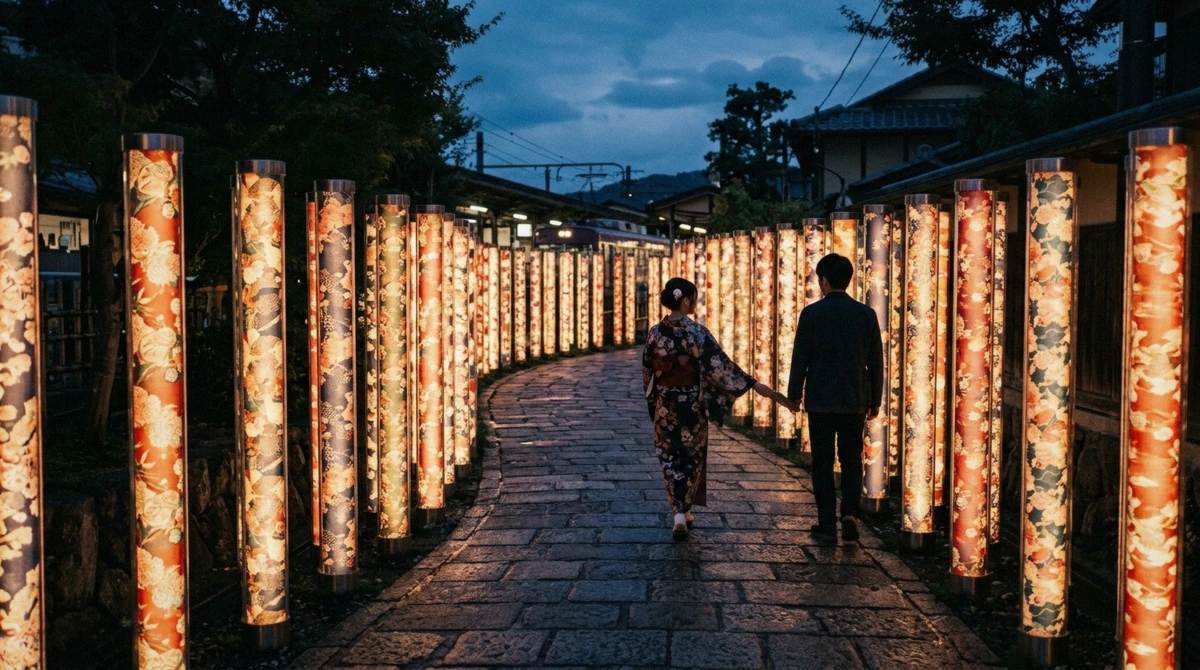
Old blog posts and forwarded photos still circulate showing the grove lit up at night in warm lantern light, from the Kyoto Arashiyama Hanatouro festival. That festival, which ran the bamboo path lit after dark, ended in 2021 and has not returned in its original form.
What it costs you: a dark, empty walk with nothing to see, since the grove itself carries no permanent lighting.
What to do instead: some short, ticketed seasonal illuminations have run since, such as an autumn 2025 event at 1,500 yen, but the dates and scope change every year and are never guaranteed. Check current listings before planning a trip around a night visit, and treat daytime as the reliable plan. Our best time to visit guide tracks what is actually running each season.
Mistake #7: Taking the Bus From Kyoto Station
What people do and why it hurts
City buses look like the obvious cheap option on a transit map, but Kyoto's bus network sits in the same traffic as everything else, and the route to Arashiyama crosses some of the city's most congested streets. A trip that should take 20 to 30 minutes can stretch well past 45 in daytime traffic.
What it costs you: unpredictable time lost, which matters most if you are trying to beat the crowds to an early arrival.
What to do instead: take the train. The JR Sagano Line runs from Kyoto Station in about 15 minutes for 240 yen, then a 10 minute walk to the grove. The Randen tram costs 250 yen and stops at the Kimono Forest at the Arashiyama terminal on the way. The Hankyu line via Katsura works too, with a 15 minute walk over Togetsukyo Bridge at the end.
Mistake #8: Booking the Wrong Tour Type for the Day You Actually Want
What people do and why it hurts
Six different tours reach this grove and they are not interchangeable. Booking a 10-hour five-temple bus tour when what you actually wanted was a slow, unhurried morning in Arashiyama means 30 minutes in the bamboo sandwiched between long coach transfers to Fushimi Inari and Kinkaku-ji. Booking the short 45-minute rickshaw run when you actually wanted a full day covering the wider Sagano district leaves the rest of your afternoon unplanned.
What it costs you: a day that technically visits the grove but does not deliver the kind of day you pictured.
What to do instead: match the tour to the goal. A slow morning in Arashiyama and Sagano alone points toward the private walking tour or the three-hour guided walk. A first Kyoto visit trying to cover several icons in one day points toward the bus tours. The photograph-first visit points toward the rickshaw tour, and a scenery-heavy day with a train and river boat points toward the train, boat and onsen tour.
Mistake #9: Skipping the Grove Because You Heard It Is Overrated
What people do and why it hurts
A genuine myth circulates that the bamboo forest is a five-minute photo stop not worth a special trip, usually from travelers who arrived at midday, stood in a crowd for ten minutes, and left. That single bad window gets generalized into advice that skips the place entirely.
What it costs you: missing a free, 24-hour site that sits directly beside Tenryu-ji, a UNESCO World Heritage temple, for the price of one bad timing decision someone else made.
What to do instead: the fix for this one is simply timing, not avoidance. Go before 8:00 or after 17:00, and compare bamboo forest tours in Kyoto if you would rather have the sequence planned for you.
Fix-It Table
Every mistake above in one place, matched to its real cost and the fix that solves it.
| Mistake | What it costs you | The fix |
|---|---|---|
| Arriving 10:00-16:00 | A crowded 10-15 min walk turns into a 30-min shuffle | Go before 8:00 or after 17:00 |
| Budgeting hours for the path | Wasted morning, disappointment at how short it is | Plan the morning around Tenryu-ji and Nonomiya Shrine, not just the grove |
| Expecting the postcard shot on foot | The empty-lane photo is not on the public path | Book the rickshaw tour for the closed lane, or reset expectations |
| Entering via the south funnel | 10 minutes stuck in the busiest bottleneck | Enter Tenryu-ji south, exit its north gate into the grove |
| No cash for the monkey park | A wasted climb to a cash-only gate | Carry yen notes; entry is 800 yen adult, 400 yen child, cash only |
| Planning a night visit for lit bamboo | A dark walk with nothing to see | Hanatouro ended in 2021; check current seasonal events before going at night |
| Taking the bus from Kyoto Station | Unpredictable delay in traffic | Take the JR Sagano Line, 240 yen, about 15 minutes |
| Booking the wrong tour type | A day that visits the grove but not the day you wanted | Match the tour to the goal, see the comparison below |
| Skipping it as "overrated" | Missing a free, 24-hour site next to Tenryu-ji | Time it right instead of avoiding it |
Dos and Don'ts at a Glance
Do
- Arrive before 8:00 or after 17:00 for a near-empty path
- Carry cash if the monkey park or a food stall is on your plan
- Enter Tenryu-ji from the south and exit its north gate on a busy day
- Match your tour to the kind of day you actually want
- Check current listings before planning any night visit
Don't
- Don't expect the closed rickshaw lane's empty-bamboo photo from the public path
- Don't budget half a morning for a 400 metre walk
- Don't take the bus from Kyoto Station when the train is faster and cheaper
- Don't assume glowing night bamboo; Hanatouro ended in 2021
- Don't skip the grove entirely because of one bad midday report
Questions About Avoiding Mistakes at the Bamboo Forest
What is the single most common mistake at the Sagano Bamboo Forest?
Arriving between 10:00 and 16:00, when tour coaches and independent visitors overlap on the same 400 metre path. It costs nothing to fix: arrive before 8:00 or after 17:00 instead.
How far ahead should you book a bamboo forest tour to avoid missing out?
Popular options like the rickshaw tour and the all-inclusive bus tour fill their earliest morning slots first, especially in the cherry blossom weeks of late March and April and the autumn color weeks of November. Booking a few days ahead for those windows, rather than the week of, keeps the early quiet slots available.
What shouldn't you do inside the bamboo forest?
Don't carve, push between, or shake the stalks, and stay on the marked path. Drones are banned in the grove area, and tripods are awkward to manage during the crowded midday hours, so plan around those windows rather than fighting them.
Do you need cash anywhere near the bamboo forest?
Yes, at Iwatayama Monkey Park specifically: 800 yen for adults and 400 yen for children, cash only, no cards accepted at the gate. The grove itself is free and needs no cash at all.
Is Fushimi Inari or the bamboo forest the better use of a short day?
They are different experiences rather than competitors: Fushimi Inari is a free torii-lined mountain hike, the bamboo forest is a free 15-minute corridor beside a UNESCO temple. Both are free and both fit into one day; one tour on this site pairs them together if a single day is all you have.
Can a rainy day ruin a bamboo forest visit?
Not really. The path is outdoors and uncovered but short, and rain thins the crowds noticeably, which some visitors consider a fair trade. Bring a compact umbrella or rain layer rather than rescheduling.